









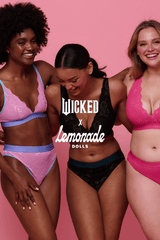




Sustainable lingerie UK starts with three things: the fabric it’s made from, the supply chain behind it, and the proof a brand can show you. If any of those are missing, you’re probably looking at a marketing exercise rather than a genuine commitment. Here’s how to tell the difference — and where to find brands actually doing the work.
Table of Contents
- What “Sustainable Lingerie” Actually Means
- The Greenwashing Checklist: Red Flags to Watch For
- Fabrics That Matter (And Ones That Don’t)
- Certifications Worth Trusting
- What Ethical Lingerie Brands Do Differently
- How to Build a Sustainable Lingerie Drawer
- FAQs
What “Sustainable Lingerie” Actually Means
The word “sustainable” has been stretched so thin by fashion marketing that it barely holds meaning any more. So let’s pin it down.
Sustainable lingerie is underwear designed, sourced, and manufactured with measurable environmental and ethical standards — covering raw materials, production processes, worker conditions, packaging, and end-of-life disposal.
Sustainable lingerie is not a regular polyester bra with a green swing tag and a tree on the packaging. It’s not a “conscious collection” that accounts for 2% of a brand’s output while the other 98% is business as usual. And it’s not a vague promise to “do better” with no timeline or specifics attached.
Genuine sustainable lingerie UK brands address the full lifecycle of a garment. That includes where the fibre comes from, how it’s processed, who sews it, what the packaging is made of, and what happens when you’re done wearing it. According to the Fashion Transparency Index 2023 by Fashion Revolution, only 18% of major fashion brands disclose their raw material suppliers — which tells you how rare genuine transparency still is.
A brand that can answer “Where does your modal come from?” and “What happens to this bra when it wears out?” is operating on a completely different level from one that just swapped its polybags for paper and called it a day.
The Greenwashing Checklist: Red Flags to Watch For
Greenwashing in the lingerie industry is rampant. Brands know that “eco” sells, and some have become very skilled at looking sustainable without actually changing much. Here’s what to watch for.
Greenwashing Red Flags vs Genuine Sustainability Signals
Red Flag (Greenwashing)
Green Flag (Genuine)
Vague terms: “eco-conscious,” “planet-friendly,” “green”
Specific fabric breakdowns with percentages (e.g., 91% biodegradable modal)
No certifications named or linked
Third-party certifications listed: OEKO-TEX, GOTS, B Corp
| “Sustainable collection” is a tiny fraction of total output | Sustainability is the default across all products |
|---|---|
| No factory or supply chain information published | Named factories, published transparency reports |
| Recyclable packaging but synthetic garment inside | Both garment and packaging address environmental impact |
| Carbon “neutral” claims without methodology | Named carbon offset partners with verifiable projects |
According to the Competition and Markets Authority (CMA), up to 40% of green claims made online could be misleading. Their Green Claims Code, published in 2021, explicitly warns against vague, unsubstantiated environmental claims — yet much of the lingerie industry still leans on exactly that.
The simplest test: if a brand’s sustainability page is mostly adjectives and stock photos of forests, but short on data, certifications, and factory names, it’s marketing. Genuinely ethical lingerie brands don’t hide behind mood boards.
Fabrics That Matter (And Ones That Don’t)
The single biggest factor in whether lingerie is truly sustainable is what it’s made from. Fabric accounts for the majority of a garment’s environmental footprint — from raw material extraction through to end-of-life decomposition.
| Lingerie Fabrics Ranked by Sustainability | Fabric |
|---|---|
| Source | Biodegradable? |
| Microplastic Risk | Notes |
| Biodegradable modal | Beechwood pulp (renewable) |
| Yes | None |
| Closed-loop production; softer than cotton | Tencel / Lyocell |
| Eucalyptus/beechwood pulp | Yes |
| None | Similar closed-loop process to modal |
| Organic cotton | Cotton plant (no pesticides) |
| Yes | None |
| Lower water use than conventional cotton; look for GOTS | Hemp |
| Hemp plant | Yes |
| None | Extremely low water use; less common in lingerie |
| Recycled polyester | Plastic bottles / waste polyester |
| No | Yes |
| Better than virgin polyester, but still sheds microplastics | Virgin polyester / nylon |
| Crude oil | No |
| Yes | 200+ years to decompose; highest environmental cost |
The Everyday Eco collection from Lemonade Dolls uses 91% biodegradable modal sourced from sustainably managed beech forests, blended with 9% elastane for stretch and recovery. Even the elastics are 100% recycled. It’s a formula that proves you don’t need virgin synthetics to make lingerie that feels brilliant and holds its shape.
According to Textile Exchange’s Preferred Fiber and Materials Market Report, regenerated cellulose fibres like modal and Tencel still represent only around 6-7% of global fibre production. The market is still dominated by polyester (over 50%) and conventional cotton (around 22%). Choosing modal or Tencel over synthetics puts you firmly in the better-choice minority.
One important note: watch for brands listing “modal” without specifying whether it’s biodegradable. Not all modal is created equal — generic modal may not carry the same closed-loop production guarantees as certified biodegradable varieties.
Certifications Worth Trusting
Certifications are the receipts behind the claims. They’re issued by independent third parties, involve audits and testing, and can’t simply be self-awarded. If a brand mentions sustainability but doesn’t hold any of these, ask why.
OEKO-TEX Standard 100 tests finished textiles for over 100 harmful substances — including formaldehyde, heavy metals, pesticides, and phthalates. It confirms the product is safe for direct skin contact, which matters enormously for underwear. Lemonade Dolls’ fabrics carry this certification.
GOTS (Global Organic Textile Standard) is the gold standard for organic fibre products. It covers the entire supply chain, from raw material harvesting through manufacturing, and includes social criteria like fair wages and safe working conditions.
B Corp certification evaluates a company’s entire social and environmental performance — not just one product line. It’s a comprehensive assessment that covers governance, workers, community, environment, and customers.
The absence of certifications doesn’t automatically mean a brand is dishonest. Small brands sometimes can’t afford the audit process. But established companies with big marketing budgets and no certifications? That’s a choice, not a limitation.
Browse Lemonade Dolls’ transparency page to see how a brand lays out its certifications and supply chain details in one place. That’s the standard to hold others to.
What Ethical Lingerie Brands Do Differently
Beyond fabric and certifications, ethical lingerie brands separate themselves through operational commitments that fast fashion simply doesn’t match.
Supply chain transparency. They name their factories. They publish where fabrics are milled and garments are sewn. They don’t hide behind “designed in the UK” as a way to avoid disclosing that manufacturing happens in unaudited facilities overseas. Lemonade Dolls shares its complete supply chain on its transparency page, because accountability isn’t something that should require a Freedom of Information request.
End-of-life responsibility. Selling a product is only half the equation. What happens when it wears out? Sustainable bra brands and knicker makers plan for this. Lemonade Dolls partners with TerraCycle to offer a recycling pathway for worn-out lingerie. Carbon emissions from production and shipping are offset through Tree Nation — a verifiable, trackable programme, not a vague pledge.
Inclusive by design. Founded by Lemon Fuller in 2019, Lemonade Dolls built inclusivity into its foundation. Sustainable fashion shouldn’t be a premium-only, limited-size niche. It should work for every body. That principle shapes everything from size ranges in bras and briefs to the brand’s pricing and marketing.
Consistency over capsule collections. Some high-street brands launch a “sustainable edit” of 10-15 pieces while continuing to produce thousands of synthetic styles. Genuine eco friendly underwear UK brands make sustainability the baseline, not the exception. Every piece should meet the same standard, not just the ones photographed next to a potted plant.
Check the best sellers to see which sustainable styles other shoppers are reaching for — it’s practical proof that eco friendly underwear doesn’t mean compromising on what you actually want to wear.
How to Build a Sustainable Lingerie Drawer
Switching to sustainable lingerie doesn’t require throwing everything out and starting fresh. That would be wasteful in itself. A smarter approach is gradual, intentional, and built around what you actually wear.
Audit what you own. Pull everything out of your drawer. Separate the pieces you wear regularly from the ones shoved in the back. Check labels — you’ll likely find most are polyester or nylon blends. Knowing your starting point helps you prioritise replacements.
Replace high-rotation pieces first. Your everyday bras and knickers get the most wear and the most washes. Swapping those to biodegradable modal or organic cotton makes the biggest immediate impact. A few pairs of sustainable briefs and a couple of well-fitting bras will cover your weekly rotation.
Don’t bin old pieces — recycle them. TerraCycle programmes (including Lemonade Dolls’ partnership) accept worn-out underwear for recycling. Textile banks and some council collection points also take them. Keeping old lingerie out of landfill is half the battle.
Buy less, buy better. You don’t need 30 pairs of knickers. Most people rotate through 7-10 regularly. Invest in fewer, longer-lasting pieces made from materials that won’t shed microplastics into your local waterway every wash day.
Use care to extend lifespan. Wash at 30 degrees. Use a mesh laundry bag. Skip the tumble dryer. These small habits add months — sometimes years — to the life of quality lingerie. Better for the planet, better for your wallet.
The Everyday Eco collection is built for exactly this approach: durable, comfortable daily wear made from 91% biodegradable modal with 100% recycled elastics, OEKO-TEX certified, and recyclable through TerraCycle when they finally reach end of life.
FAQs
What makes lingerie genuinely sustainable?
Genuinely sustainable lingerie uses natural or regenerated fibres like organic cotton, Tencel, or biodegradable modal instead of virgin synthetics. It also requires third-party certifications (OEKO-TEX, GOTS), transparent supply chain information, recycled or minimal packaging, and an end-of-life plan such as a recycling programme. The Everyday Eco collection ticks all of these boxes with published evidence behind each claim.
How can I tell if a lingerie brand is greenwashing?
Look for vague language like “eco-conscious” or “planet-friendly” without any data or certifications to back it up. Greenwashing brands often highlight one small initiative — like recyclable packaging — while ignoring the fact that their actual garments are made from virgin polyester in opaque supply chains. If you can’t find specific fabric breakdowns, named certifications, or factory information, treat the sustainability claims with scepticism.
Is sustainable lingerie more expensive than regular lingerie?
The upfront price is often higher, but the cost per wear is typically lower. A well-made bra or pair of knickers lasting 3+ years can work out cheaper per wear than a budget one replaced every few months. You’re also paying for fair wages, responsible materials, and environmental accountability — none of which come free. That said, brands like Lemonade Dolls prove that sustainable doesn’t have to mean luxury-priced.
What certifications should I look for when buying eco friendly underwear UK?
The most reliable certifications are OEKO-TEX Standard 100 (tested for harmful chemicals), GOTS (Global Organic Textile Standard for organic fibres), and B Corp. These are third-party verified, meaning the brand didn’t just award them to itself. Check a brand’s transparency page for certification details.
Can sustainable bras actually offer good support?
Absolutely. Sustainable bra brands have moved well beyond flimsy hemp bralettes. Modern eco friendly bras use engineered fabrics like biodegradable modal blended with elastane for stretch and recovery, recycled elastic for band support, and thoughtful pattern cutting. The bra collection at Lemonade Dolls demonstrates that wireless sustainable bras can offer real, everyday support without underwire — because the quality of materials and construction matters more than whether the fabric came from a beech tree or an oil rig.
