














When you’re shopping for the best eco fabric underwear, three names dominate the conversation: cotton, modal, and bamboo. Modal wins the overall sustainable fabric comparison for underwear — it uses up to 20x less water than cotton, biodegrades naturally, and actually gets softer with every wash. But each fabric has trade-offs worth understanding before you open your wallet.
Table of Contents
- How Each Fabric Is Made
- Sustainability Head-to-Head
- Comfort, Fit, and Durability
- The Chemical Processing Question
- Which Fabric Suits Your Lifestyle?
- What We Chose (and Why)
How Each Fabric Is Made
Understanding where your knickers come from starts at the source — literally the plant.
Cotton is a natural fibre harvested from the cotton plant’s seed pods. It’s spun directly into yarn without chemical conversion, which is why people call it “natural.” Sounds simple enough, but conventional cotton farming uses staggering amounts of water and pesticides. According to the Textile Exchange’s Preferred Fiber and Materials Report, cotton accounts for roughly 24% of global insecticide use despite covering just 2.4% of arable land. Organic cotton eliminates the pesticides but doesn’t solve the water problem.
Modal is a semi-synthetic fibre made from beech tree pulp. The wood is dissolved into a cellulose solution, then extruded through spinnerets to create ultra-fine fibres. It sounds industrial, but the process is remarkably clean — particularly when manufacturers use closed-loop systems that recover and reuse up to 95% of solvents. Beech trees also regenerate naturally without irrigation or replanting, making the raw material inherently low-impact.
Bamboo is where things get complicated. Raw bamboo grows rapidly — some species shoot up a metre a day — without pesticides or much water. Brilliant. But most “bamboo” underwear is actually bamboo viscose, produced using a chemical-heavy process involving sodium hydroxide and carbon disulphide. Unless a brand specifies bamboo lyocell (a cleaner closed-loop method), that eco-sounding label may be hiding a dirty secret.
Sustainability Head-to-Head
Here’s where the sustainable fabric comparison gets concrete. Let’s look at the numbers.
| Environmental Impact: Cotton vs Modal vs Bamboo | Factor |
|---|---|
| Conventional Cotton | Organic Cotton |
| Modal (Beechwood) | Bamboo Viscose |
| Water usage | Very high (~10,000L/kg) |
| High (~6,000-8,000L/kg) | Very low (~500L/kg) |
| Low (~2,500L/kg) | Pesticide use |
| Heavy | None |
| None | None |
| Chemical processing | Minimal |
| Minimal | Moderate (closed-loop) |
| Heavy (open-loop typical) | Biodegradable |
| Yes | Yes |
| Yes | Yes |
| Land regeneration | Replanting needed |
| Replanting needed | Self-regenerating forests |
| Self-regenerating | Carbon footprint |
| High | Moderate |
| Low | Moderate |
According to the Lenzing Group’s lifecycle assessment data, modal fibre produced from sustainably managed beech forests uses up to 20 times less water than conventional cotton. That’s not a marginal improvement — it’s a different league.
Modal is the strongest all-round performer in a sustainable fabric comparison. It ticks the boxes on water use, land impact, and end-of-life biodegradability. Cotton is the weakest on water. Bamboo has raw-material advantages but loses ground in processing.
Bamboo viscose isn’t as green as most brands want you to believe. The chemical conversion process, when not run in a closed loop, releases pollutants into waterways and exposes factory workers to toxic fumes. The FTC in the US has actually fined companies for labelling bamboo viscose as “bamboo” without disclosing the manufacturing process.
Comfort, Fit, and Durability
Sustainability matters, but your underwear also needs to feel good at 7am on a Monday. Here’s how these fabrics stack up against your skin.
Comfort and Performance: Cotton vs Modal vs Bamboo
| Property | Cotton |
|---|---|
| Modal | Bamboo Viscose |
| Softness | Good (stiffens with washing) |
| Excellent (softens with washing) | Very good (can lose silkiness) |
| Moisture wicking | Absorbs but holds moisture |
| 50% more absorbent; wicks efficiently | Good wicking ability |
| Breathability | Good |
| Excellent | Very good |
| Shape retention | Poor (stretches & shrinks) |
| Excellent | Moderate |
| Pilling resistance | Low |
| High | Moderate |
| Colour retention | Fades over time |
| Holds dye well | Holds dye moderately |
The modal underwear benefits are hard to argue with. It’s 50% more absorbent than cotton according to fibre manufacturers’ testing data, which means it pulls moisture away from your skin rather than sitting damp against it. Anyone who’s worn cotton knickers on a hot commute knows exactly how that feels.
Cotton’s biggest weakness? It doesn’t age gracefully. After a dozen washes, cotton underwear starts to sag, pill, and lose its shape. Modal does the opposite — it actually gets softer with each wash cycle while holding its structure. That translates to a longer lifespan per pair, which means fewer replacements and less waste over time.
Bamboo viscose lands in the middle. It starts beautifully soft but doesn’t hold up quite as well as modal through repeated laundering. It’s also more prone to wrinkling, which isn’t a dealbreaker for underwear but tells you something about the fibre’s structural integrity.
The Chemical Processing Question
This is the section most “eco fabric” articles skip, and it’s arguably the most important.
All three fabrics involve some form of processing. Cotton needs bleaching and dyeing. Modal requires dissolving wood pulp in chemicals to create fibre. Bamboo viscose goes through the most aggressive chemical transformation of the lot.
The difference isn’t whether chemicals are used — it’s how they’re managed.
According to the Global Fashion Agenda’s Pulse of the Fashion Industry report, closed-loop manufacturing systems that recover and reuse chemical inputs are the gold standard for regenerated cellulose fibres. Modal production by leading manufacturers like Lenzing achieves up to 95% solvent recovery. That means the chemicals don’t end up in rivers, soil, or workers’ lungs.
Bamboo viscose producers don’t always hit that mark. The conventional viscose process uses carbon disulphide — a compound linked to neurological damage in factory workers when exposure isn’t properly controlled. Some bamboo brands have shifted to cleaner lyocell processes, but they’re still the minority. If a brand doesn’t specify its manufacturing method, that’s a red flag worth noting.
Cotton processing is comparatively mild, but it’s not chemical-free. Conventional cotton is often treated with formaldehyde-based finishes and chlorine bleach. Organic cotton with GOTS certification avoids the worst of these, though dyeing still involves chemical inputs.
The takeaway? Don’t judge a fabric by its plant. Judge it by its process, its certifications, and the transparency of the brand selling it. You can dig into our own supply chain on our Transparency page.
Which Fabric Suits Your Lifestyle?
There’s no single best eco fabric underwear choice for everyone. Your body, your climate, and your priorities all matter.
Go with modal if: you want the best balance of comfort, durability, and sustainability. It’s ideal for everyday wear, handles sweat brilliantly, and lasts years without degrading. If you’re building a capsule underwear drawer, modal should be your foundation.
Go with organic cotton if: you have extremely sensitive skin and prefer a fully natural, minimally processed fibre. Some people with conditions like eczema respond better to cotton’s texture. Just be aware of the higher water footprint and shorter garment lifespan.
Go with bamboo lyocell if: you can verify the manufacturing process is closed-loop. Bamboo lyocell (not bamboo viscose) offers a genuinely sustainable option with a soft hand feel. The problem is finding brands that actually use lyocell rather than the cheaper viscose process — and are honest about it.
Avoid bamboo viscose if: sustainability is your primary motivator. Unless the brand can prove closed-loop manufacturing and provide third-party certification, bamboo viscose often trades one environmental problem (cotton’s water use) for another (chemical pollution).
For a deeper look at modal’s properties, have a read of our full guide on what modal fabric is and why it works for underwear.
What We Chose (and Why)
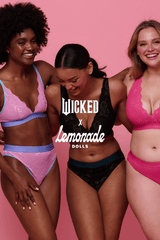
When Lemon Fuller founded Lemonade Dolls in 2019, the fabric question wasn’t theoretical — it was the first major decision.
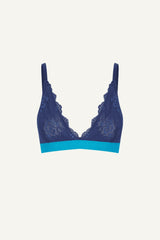
We went with 91% biodegradable modal sourced from sustainably managed beech tree forests, blended with 9% elastane for stretch. The modal gives you that second-skin softness and all-day moisture management. The elastane ensures everything stays put. Our Everyday Eco collection is built entirely on this blend.
Modal isn’t a perfect fabric, but it is the best option currently available for underwear that balances comfort, longevity, and genuine environmental responsibility. We’re not going to pretend otherwise. Cotton is too thirsty. Bamboo viscose processing is too opaque. Modal, sourced responsibly and certified properly, gives us — and you — something we can stand behind.
Browse our best sellers to feel the difference yourself, or explore our full range of bras and briefs.
Frequently Asked Questions
Is modal better than cotton for underwear?
In most cases, yes. Modal is 50% more absorbent than cotton, resists pilling, stays softer through repeated washes, and uses up to 20 times less water to produce. Cotton still has the advantage of being a fully natural fibre, but responsibly sourced modal outperforms it on comfort and environmental footprint.
Is bamboo underwear actually sustainable?
It depends on how the bamboo is processed. Most bamboo underwear is made from bamboo viscose, which requires heavy chemical processing using sodium hydroxide and carbon disulphide. Raw bamboo grows quickly without pesticides, but the manufacturing process can offset those benefits unless a closed-loop system is used. Always check for certifications like OEKO-TEX.
What is the most sustainable fabric for underwear?
Biodegradable modal sourced from sustainably managed forests is one of the most sustainable choices. It uses significantly less water than cotton, is produced in a closed-loop process that recovers solvents, and biodegrades at end of life.
Does bamboo fabric feel the same as modal?
They feel similar — both are silky-smooth and drape well against skin. However, modal tends to hold its softness longer through wash cycles. Bamboo viscose can lose its initial silkiness after repeated washing and is more prone to wrinkling. Modal also has slightly better moisture-wicking performance.
Can cotton underwear be eco-friendly?
Organic cotton is more eco-friendly than conventional cotton because it avoids synthetic pesticides and fertilisers. However, it still requires substantially more water than modal or lyocell alternatives. If you prefer cotton, choose GOTS-certified organic cotton and look for brands that offset water use through responsible supply chain practices.
