








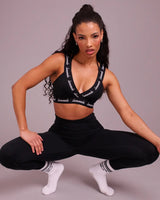





The best sports bra for running is a high-support style with encapsulated cups, wide non-stretch straps, a firm underband and breathable moisture-wicking fabric. Running is high impact, so it needs maximum hold to control bounce, prevent breast pain and keep you running comfortably mile after mile. Here's exactly what to check.
- Why running needs a dedicated bra
- Get the support level right
- Straps, band and back style
- Fabric and breathability
- Running sports bra fit guide
- What to wear for your autumn runs
- Sports bra mistakes that cost runners
- Dressing for cooler autumn runs
- FAQs
Why running needs a dedicated bra
Running is one of the highest-impact things you can do to your chest. According to the University of Portsmouth Research Group in Breast Health, breasts move in a butterfly pattern when you run, with around 50% of the movement vertical, 25% side to side and 25% front to back. Up to 72% of women report breast pain during exercise, and that pain is a leading reason women give up running.
A running sports bra is designed to control multi-directional movement and absorb repeated impact. It is not a low-impact yoga bra or a compression crop top, which only manage gentle vertical movement. The stakes are higher than comfort, too: there's no muscle holding the breast in place, only skin and Cooper's ligaments, and once those stretch they don't bounce back.
There's an upside to getting it right. According to research in Frontiers in Sports and Active Living, greater breast support lowers oxygen consumption and improves running economy, and a separate Portsmouth study suggested a well-designed sports bra could improve running performance by up to 7%. Insufficient support, by contrast, has been linked to a shorter stride and less economical running mechanics. Better support literally makes the run feel easier.
Get the support level right
Every sports bra falls into a support tier. For running, you want the top one, full stop. Matching the tier to the activity is the single most important decision you'll make.
| Support level | Movement controlled | Right for running? |
|---|---|---|
| Low | Gentle vertical only | No |
| Medium | Moderate multi-directional | Only for slower jogging, smaller cups |
| High / maximum | Strong multi-directional, impact absorbing | Yes, for everyone |
According to the Portsmouth researchers, who have logged over a million breast bounces, a higher neckline helps: every 1cm of extra height on a high-support bra reduces bounce by roughly 1%. If you have a fuller bust, read our dedicated fuller-bust support guide alongside this one, because D+ runners benefit most from encapsulation.
Straps, band and back style
The architecture of the bra matters more than any logo on it. Three parts do the real work.
- Straps: wide and minimally stretchy. Stretchy straps let the bust bounce; firm straps hold it. Adjustable is best so you can fine-tune.
- Underband: this carries 80% of the support. It should feel firm and stay level around your ribcage without riding up when you raise your arms.
- Back style: a racerback or cross-back pulls the straps inward and stops them slipping mid-stride, which is why so many running bras use it.
Clasps and closures are worth a thought too. A front or back closure makes a high-support bra far easier to get on and off when you're hot and sweaty after a run, without wrestling a tight bra over your head and shoulders.
Fabric and breathability
Autumn running means cool air but a warm body, and you'll still sweat. The fabric needs to wick moisture away and dry fast so you're not left damp and chilled at the end. Avoid pure cotton, which holds sweat against the skin and chafes once it's wet.
Look for breathable mesh panels at the front and underband where heat builds, plus soft, OEKO-TEX certified fabrics that won't irritate skin during repetitive movement. According to OEKO-TEX, their Standard 100 label means every component, right down to the thread, has been tested against more than 1,000 harmful substances. Smooth, flat seams matter as well: anything raised will rub raw over a long run. Our guide to modal and eco fabrics explains why softer fibres sit better against sweaty skin.
Running sports bra fit guide
Buy on fit, not on the size printed inside your old bra. Sports bra sizing varies between brands, so always test before you trust the label.
| Area | Good fit | Needs adjusting |
|---|---|---|
| Underband | Snug, level, stays put when arms raise | Rides up or slides round |
| Cups | Bust fully contained, no spillage or gaping | Overflow at top or wrinkled fabric |
| Straps | Secure, no dig, two-finger gap | Slipping or leaving red marks |
| Jog test | Very little bounce, no pain | Noticeable movement |
Always do the jog-on-the-spot test in the changing room. If you don't know your everyday size to start from, our at-home measuring guide takes five minutes. And once a band has stretched out or the bounce returns, replace it. Our piece on knowing when to replace a bra covers the warning signs.
What to wear for your autumn runs
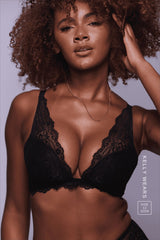
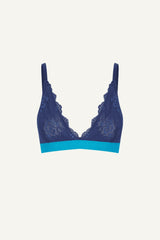
As routines restart after summer, comfortable kit makes all the difference between sticking with it and stalling. Our Signature Lace High-Support Bralette gives encapsulated, breathable hold, and The One high-support bra combines structure with our signature lace for longer sessions.
Round out your kit with moisture-managing crew socks and explore the full inclusive activewear collection. Every piece is designed to move with you, not against you.
Sports bra mistakes that cost runners
Even seasoned runners get tripped up by the same handful of errors. Avoid these and your bra will perform the way it's meant to.
| Mistake | What happens | Fix |
|---|---|---|
| Wearing an old, stretched bra | Support quietly fades, bounce creeps back | Replace every 6 to 12 months |
| Buying on size label alone | Sports bra sizing varies by brand | Always do the jog test |
| Loose underband | Loses most of the support | Snug band that stays level |
| Medium support for long runs | Under-supported on high impact | Choose high or maximum support |
| Pure cotton in wet weather | Holds sweat and rain, chafes | Moisture-wicking fabric |
The most common of all is hanging on to a favourite bra long past its prime. Elastic fibres wear out with every wash and sweaty session, and a bra that's lost its stretch supports a runner about as well as none at all. If yours rides up at the back or the bounce has returned, it's done its miles.
Dressing for cooler autumn runs
As the mornings turn crisp, the temptation is to bundle up, but you'll warm fast once you're moving. The trick is a breathable high-support bra as your base layer, topped with a light, moisture-wicking long-sleeve you can push up or unzip as you heat up. Cotton tees trap sweat against the skin and leave you cold at the end, so save them for the walk home.
Cooler air also makes a snug, supportive band feel even better, since there's less swelling and shifting than on hot days. Keep doing the jog test through the season, though, because thicker layers can mask a bra that's started to slip. Finish your kit with breathable socks and pieces that move with you. Our guide to layering for cooler days has more on staying comfortable as the weather turns, and the right base layer means one less excuse to skip the run.
Can I run in a normal sports bra?
Only if it's rated high or maximum support. Running is high impact, so a low or medium-support sports bra won't control the bounce enough and can cause pain or stretch the breast ligaments. Check the support level on the label and do a jog test before relying on it for runs.
Should a running sports bra be tight?
It should be snug and firm, especially around the underband, but never so tight it restricts your breathing. You want to fit two fingers under the straps and band, feel minimal bounce when you jog on the spot, and still take a full deep breath comfortably.
How do I stop my breasts hurting when I run?
Wear a high-support encapsulation sports bra in your correct size, replace it once the band stretches, and do the jog test to confirm minimal movement. Breast pain during running is usually a sign of too little support, so sizing up the support level, not the bra, is the fix.
Do running sports bras have a different fit to gym bras?
They prioritise impact control over everything else, so they tend to have firmer straps, a higher neckline and a racerback to stop bounce. A gym or yoga bra can be lower support and more flexible. For running specifically, choose the highest support level you find comfortable.
How tight should the underband be?
The underband should feel firm and stay level all the way round without riding up when you lift your arms. It does most of the support work, so a band that's too loose is the most common reason a running bra fails. You should be able to slip two fingers underneath, no more.
