












The best underwear for hot weather is made from moisture-wicking, quick-drying fabric — not just any cotton. Modal, micro-mesh, and bamboo blends pull sweat away from skin and let air circulate where standard knickers trap heat. Here’s what to actually look for, what to avoid, and which fabrics hold up when UK summers turn sticky.
Table of Contents
- Why Your Regular Underwear Fails in the Heat
- Best Breathable Underwear Fabrics Compared
- What Makes Underwear Sweat Proof (and What Doesn’t)
- Best Underwear Styles for Summer
- How to Care for Summer Underwear So It Lasts
- Breathable Bras for Hot Weather: What to Wear on Top
Why Your Regular Underwear Fails in the Heat
Most underwear wasn’t designed for heat. It was designed for coverage, shape, and aesthetics — breathability comes as an afterthought, if it comes at all. When temperatures climb above 25°C, the gap between “fine indoors” and “genuinely uncomfortable” narrows fast.
The main culprit is fabric. Standard cotton jersey — the material in most everyday knickers — absorbs moisture readily but releases it slowly. On a mild day, that’s no problem. On a humid July afternoon, it means your underwear soaks up sweat and just sits there, damp against your skin for hours. That creates friction, encourages bacterial growth, and leads to the kind of discomfort nobody wants to talk about but everyone’s felt.
According to research published in the Textile Research Journal, modal fibres absorb approximately 50% more moisture than cotton by weight while releasing that moisture significantly faster through evaporation. That’s not a marginal improvement — it’s a fundamental difference in how the fabric behaves against warm skin.
Breathable underwear is not just underwear with a thin fabric. True breathability requires a combination of moisture absorption, vapour transfer, and airflow — three properties that work together to keep the microclimate between fabric and skin cool and dry.
Construction matters too. Tight elastic waistbands that don’t stretch with your body trap heat at the waistline. Thick overlocked seams hold moisture in ridges against skin. And fully lined gussets, while well-intentioned, can double the fabric layers right where ventilation matters most.
Best Breathable Underwear Fabrics Compared
Not all “breathable” fabrics perform equally. Here’s how the most common summer underwear women reach for actually stack up when the heat arrives.
Modal is a semi-synthetic cellulose fibre made from beechwood pulp. It’s silky, lightweight, and excels at pulling moisture away from skin and releasing it into the air. It’s also 91% biodegradable in the right conditions, which is why it forms the backbone of our Everyday Eco collection — knickers and bralettes that feel cool against skin and don’t sit in landfill for centuries.
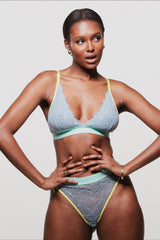
Power mesh (also called stretch mesh) takes a different approach. Instead of absorbing moisture, it lets air pass directly through the fabric. The open-knit structure creates ventilation that no solid fabric can match. Our So Soft Mesh range uses this principle — you get support and coverage with genuine airflow.
Bamboo viscose feels similar to modal and shares some moisture-wicking properties, though its environmental claims vary widely depending on the processing method used.
Cotton remains the default, but it’s middle-of-the-road for summer. Breathable, yes. Quick-drying, no.
Nylon and polyester are durable and cheap, but they’re petroleum-based synthetics that trap heat and odour. Fine for gym shorts with ventilation panels. Not great pressed directly against skin all day.
| Fabric | Moisture Wicking |
|---|---|
| Dry Time | Breathability |
| Best For | Modal |
| Excellent | Fast |
| High | All-day summer wear |
| Power mesh | Good (pass-through) |
| Very fast | Very high |
| Maximum airflow, layering | Bamboo viscose |
| Good | Moderate |
| High | Sensitive skin |
| Cotton | Moderate |
| Slow | Moderate |
| Mild warmth only | Nylon/polyester |
| Poor | Fast |
| Low | Structured activewear |
According to the OEKO-TEX Association, Standard 100 certification tests fabrics for over 350 harmful substances — a useful benchmark when choosing underwear that sits against your body in heat, since warm, moist skin absorbs chemicals more readily.
What Makes Underwear Sweat Proof (and What Doesn’t)
Let’s be clear: no underwear is fully sweat proof. You’re going to sweat — that’s your body doing its job. What good summer underwear does is manage that sweat so it doesn’t pool, cling, or cause problems.
Sweat proof underwear is underwear that wicks moisture away from skin, distributes it across a wider surface area, and allows it to evaporate quickly. The result is that you stay drier and more comfortable, even though you’re still perspiring.
There are three things that determine how well a pair of knickers handles sweat:
1. Absorption rate. How fast the fabric pulls moisture off your skin. Modal and micro-mesh both score well here — modal absorbs it, mesh lets it pass through.
2. Evaporation speed. How quickly that absorbed moisture leaves the fabric. This is where cotton falls behind. It absorbs well but holds onto moisture, which is why cotton knickers feel clammy on hot days.
3. Vapour permeability. How easily water vapour (not just liquid sweat) passes through the fabric. Your body releases moisture as vapour constantly, and fabrics that block that vapour create a humid microclimate against your skin.
According to the British Journal of Dermatology, prolonged skin contact with damp fabric in warm conditions increases the risk of irritant contact dermatitis and fungal skin infections. Choosing quick-drying underwear isn’t just a comfort decision — it’s a practical hygiene one.
A few things that sound good but don’t help much: anti-bacterial sprays applied to fabric (they wash out within a few cycles), “cooling” finishes (temporary chemical treatments), and double-layer gussets made from non-wicking materials (they add insulation, not ventilation).
What does help: single-layer construction in breathable fabric, flat or bonded seams, and elastic that sits flat rather than rolling.
Best Underwear Styles for Summer
Fabric gets most of the attention, but the cut of your underwear matters just as much when you’re dressing for heat. Different styles cover different amounts of skin, and coverage directly affects how much heat gets trapped.
Thongs use the least fabric, which means minimal heat retention. They’re a solid pick under tight summer dresses and linen trousers where visible panty lines are the enemy. The trade-off: less surface area for wicking, so the fabric quality matters even more.
Briefs cover more ground and distribute moisture across a wider area. In a quick-drying fabric like modal, that’s actually an advantage — more fabric means more wicking capacity. Browse our briefs collection for styles that sit flat under summer clothes.
Shorts-style underwear (also called boy shorts or anti-chafe shorts) are the unsung hero of hot weather. They prevent inner-thigh chafing — one of the most common warm-weather complaints — while offering full coverage. Our shorts range sits smoothly under skirts and dresses without riding up.
High-waisted styles can go either way. They cover more of your torso, which traps more warmth. But if they’re made from mesh or modal, the wicking benefit often outweighs the extra coverage.
| Style | Coverage |
|---|---|
| Heat Retention | Chafe Prevention |
| Best Summer Use | Thong |
| Minimal | Very low |
| None | Under tight dresses, trousers |
| Bikini brief | Moderate |
| Low | Low |
| Everyday summer wear | Full brief |
| Full | Moderate |
| Moderate | All-day comfort, travel |
| Shorts | Extended |
| Moderate | High |
| Under skirts, active days | High-waisted |
| Full + torso | Higher |
| Moderate | Tummy smoothing under light fabrics |
The right call for most people? Two or three styles in rotation, all in breathable fabric. A pair of modal briefs for everyday wear, shorts for skirt days, and a thong when the outfit demands it. Check our best sellers to see what other people are reaching for this season.
How to Care for Summer Underwear So It Lasts
Breathable fabrics keep you comfortable, but they need a bit of care to stay that way. Treat them wrong and you’ll lose the wicking properties that make them worth buying in the first place.
Wash cool. Modal and mesh fabrics perform best when washed at 30°C. Hot water breaks down the fibres faster, and it can cause elastic to lose its stretch. In summer, you’re washing underwear more frequently anyway, so a cooler wash with a shorter cycle does the job without the wear.
Skip the fabric softener. This is the single biggest mistake people make with performance underwear. Fabric softener coats fibres with a waxy residue that blocks moisture absorption. Your knickers will feel soft out of the wash and then hold onto sweat the moment you put them on. Use a small amount of gentle detergent instead.
Air dry when you can. Tumble dryers are convenient, but the heat degrades elastic and modal fibres over time. In summer, you’ve got the weather on your side — hang them on a line or drying rack and they’ll dry in an hour or two. If you do use a dryer, stick to the lowest heat setting.
Rotate your drawer. Wearing the same three pairs on repeat means each pair gets washed dozens of times more per year than it should. A rotation of seven to ten pairs spreads the wear evenly. The Everyday Eco range is built for exactly this kind of daily rotation — modal fabric that softens with each wash rather than wearing out.
Replace when they stop performing. If your underwear takes noticeably longer to dry, feels rougher against skin, or the elastic has lost its snap, the fabric has degraded past its useful life. For everyday pairs, that’s usually 6 to 12 months with regular wear.
Breathable Bras for Hot Weather: What to Wear on Top
Your underwear drawer doesn’t end at knickers. The wrong bra in hot weather causes just as much discomfort — underboob sweat, strap irritation, and overheating across the chest and back.
Wired bras are the worst offenders in summer. The wire sits in the inframammary fold — one of the warmest, most sweat-prone areas on your body — and creates a seal that blocks airflow. Add padding and you’ve essentially insulated your chest.
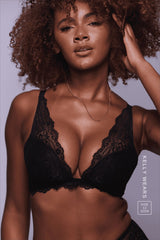
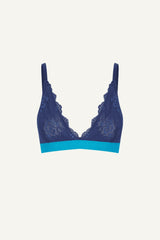
Breathable underwear UK shoppers often overlook is the bralette. Wireless construction lets air move freely across the underbust. Mesh panels provide direct ventilation without sacrificing support. And the absence of rigid structure means less contact pressure, which means less trapped heat.
Our full bra range includes wireless options in both modal and power mesh, covering sizes up to K cup. The So Soft Mesh bralettes, in particular, were built for this — the stretch mesh moves with you, dries quickly, and weighs almost nothing against your skin.
A few tips for bra comfort in the heat:
- Choose lighter colours. Dark fabrics absorb more radiant heat. White, nude, and pastel shades reflect it.
- Go wireless when you can. Wires trap sweat in the fold. No wire means no seal.
- Look for mesh panels. Even a small mesh panel at the centre gore or along the band makes a noticeable difference in airflow.
- Consider racerback styles. They pull fabric away from the armpit area, where sweat accumulates most.
You don’t have to sacrifice support for comfort. The right fabric and construction give you both — even in the middle of a heatwave.
Frequently Asked Questions
What is the best underwear fabric for hot weather?
Modal and micro-mesh are the two best underwear fabrics for hot weather. Modal is a semi-synthetic fibre made from beechwood pulp that absorbs 50% more moisture than cotton while drying faster. Micro-mesh, like power mesh used in performance lingerie, allows direct airflow against the skin. Both outperform standard cotton in breathability and moisture management during summer heat.
Is cotton underwear actually good for summer?
Cotton is breathable, but it is not ideal for the hottest days. Cotton absorbs moisture well — the problem is it holds onto it. Wet cotton clings to skin, takes hours to air-dry, and can create a warm, damp environment that encourages bacterial growth. For mild warmth, cotton works fine. For genuine heat, modal or mesh fabrics perform significantly better.
How do I stop underwear from causing chafing in summer?
Choose underwear with flat seams or bonded edges rather than overlocked stitching, which creates ridges that rub against sweaty skin. Opt for a snug but not tight fit — loose fabric bunches and causes friction, while overly tight elastic digs in. Modal and mesh fabrics reduce chafing because they stay smooth when damp rather than going rough like wet cotton. Shorts-style underwear also helps by covering the inner thigh area where chafing is most common.
Should I wear thongs or briefs in hot weather?
Both work, and it depends on your outfit and comfort preference. Thongs use less fabric, which means less surface area trapping heat — but they concentrate moisture in a narrow strip. Briefs offer more coverage and can wick sweat away from a larger area if made from the right fabric. The material matters more than the style: a modal brief will keep you cooler than a polyester thong every time.
Can I wear the same underwear for exercising and daily wear in summer?
You can if the underwear is made from a moisture-wicking fabric like modal or performance mesh. Dedicated gym underwear tends to use synthetic wicking fibres, but high-quality modal and mesh underwear handles both scenarios well. The key is avoiding 100% cotton for workouts in heat, since it absorbs sweat without releasing it. If you plan to go from errands to exercise, choose a pair that dries quickly and sits flat under activewear.
