









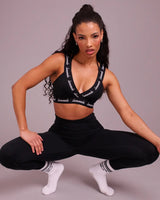





A high-impact sports bra is a maximum-support bra built to control breast movement during intense activities like running, HIIT and bootcamp. It uses encapsulated or combination construction, firm wide straps and a structured underband to cut bounce and protect the breast ligaments. Here's when you need one and how to choose well.
- What counts as high impact
- Why high-impact support matters
- How to choose a high-impact bra
- Impact level by activity
- Common fit mistakes
- High-support styles from Lemonade Dolls
- Why support depends on cup size
- Caring for a high-impact bra
- FAQs
What counts as high impact
Impact describes how much your chosen activity makes your breasts move. The more your feet leave the ground and the faster you change direction, the higher the impact. HIIT, running, bootcamp, aerobics, plyometrics, tennis and dance all sit firmly in the high-impact zone. The simplest test is your feet: if both leave the ground repeatedly, or you change direction at speed, you're in high-impact territory and need a bra built for it.
A high-impact bra is a maximum-support bra rated to control strong, repeated, multi-directional movement. It is not the same as a medium-support gym bra, which is fine for weights or cycling but lets a fuller bust bounce during a sprint. According to the University of Portsmouth Research Group in Breast Health, breasts can move up to 21cm during exercise, and that motion is multi-directional, so a bra that only handles vertical bounce isn't enough for high-impact work.
Why high-impact support matters
Breasts contain no muscle. They're held only by skin and Cooper's ligaments, which can't repair themselves once overstretched. Repeated unsupported high-impact movement is exactly what overstretches them, and the discomfort is immediate: the Portsmouth team found around 72% of exercising women experience breast pain, a major reason many avoid intense workouts.
Getting it right pays off beyond comfort. According to research in Frontiers in Sports and Active Living, greater breast support reduces oxygen consumption and improves running economy. Better support means you move more efficiently and the session feels easier. There's a clever caveat in the science, though: a separate Portsmouth study published in the European Journal of Sport Science found that aiming for 100% bounce reduction could increase loading on the spine, which is why good high-impact bras aim for strong, comfortable control rather than locking you rigid.
How to choose a high-impact bra
For maximum support, prioritise construction and fit over colour or cut. These features separate a true high-impact bra from a lookalike.
- Encapsulation or combination cups hold each breast individually, which controls movement far better than compression alone for medium and fuller busts.
- Wide, firm, adjustable straps spread load and resist stretch. According to the Portsmouth researchers, a higher neckline also helps, cutting bounce by about 1% per extra centimetre.
- A structured, wide underband anchors everything. It should stay level and never ride up.
- A racerback or secure closure stops straps slipping during fast direction changes.
- Breathable, moisture-wicking fabric for intense, sweaty sessions. OEKO-TEX certified materials are tested against harmful substances, which matters when fabric sits against sweaty skin for an hour.
If you have a fuller bust, combination construction is usually your best bet. Our fuller-bust support guide goes deeper on D+ specifics.
Impact level by activity
Use this to match the support level to what you actually do. When in doubt, or if you have a fuller bust, size the support up rather than down.
| Impact | Activities | Support needed |
|---|---|---|
| Low | Yoga, Pilates, walking, stretching | Low to medium |
| Medium | Weight training, cycling, hiking, skiing | Medium to high |
| High | Running, HIIT, bootcamp, aerobics, tennis, dance | High / maximum |
Notice how broad the high-impact category is. If your training mixes circuits, sprints and jumps, a single high-impact bra covers all of it, whereas a medium bra would leave you under-supported for the explosive parts. When you're not sure which side of the line an activity falls on, treat it as high impact and choose the stronger support. There's no penalty for over-supporting a session, but under-supporting one means bounce, discomfort and strain on the ligaments.
Common fit mistakes
Even a brilliant high-impact bra fails if it fits badly. These are the slip-ups we see most.
| Mistake | Why it's a problem | Fix |
|---|---|---|
| Band too loose | Loses most of the support | Snug, level band; size down the band if it rides up |
| Relying on straps for support | Digs into shoulders, still bounces | Let the band carry the load |
| Compression-only on a fuller bust | Breasts shift as one mass | Switch to encapsulation or combination |
| Keeping a stretched-out bra | Support quietly disappears | Replace every 6 to 12 months |
Always finish with the jump test: a few star jumps in the changing room tell you more than any size label. Not sure of your base size? Our at-home measuring guide sorts that in minutes, and our guide on when to replace a bra helps you spot a tired one.
High-support styles from Lemonade Dolls
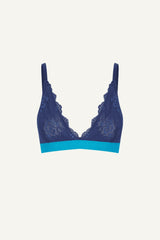
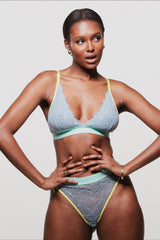
We build genuine support into pieces that still feel and look good. The Signature Lace High-Support Bralette delivers encapsulated hold for higher-impact days, while The One high-support bra pairs structure with our signature lace.
For a fuller bust, the Signature Lace Fuller Cup gives extra coverage and a stronger band. Browse the full inclusive activewear collection to build a kit that keeps up with the hardest sessions. Curious why our high-support bralettes have such a following? Read the truth about high-support bralettes.
Why support level depends on your cup size
Two people can do the same HIIT class and need different bras. The heavier the bust, the more weight is in motion and the more support it takes to control it. A B cup might manage a brisk class in a good medium-support bra, while an F cup doing the same session needs maximum, combination support to stay comfortable and protected.
| Cup size | Best construction for high impact | Why |
|---|---|---|
| A to B | Compression or light encapsulation | Less weight to control, compression holds it |
| C to D | Encapsulation | Each breast needs individual support |
| DD to F+ | Combination (encapsulation plus compression) | Maximum control for more weight in motion |
This is why blanket advice like "just get a high-support bra" only goes so far. The label tells you the support level, but the construction is what makes that level work for your shape. If you're a fuller bust, default to combination styles and read our fuller-bust support guide for the detail.
Caring for a high-impact bra so it lasts
High-support bras are an investment, and the support lives in the elastic fibres, so heat and rough washing are what kill them. Wash on a cool, gentle cycle in a mesh laundry bag, or by hand, and skip the fabric softener, which coats the fibres and reduces their stretch over time.
Never tumble dry a high-impact bra. The heat breaks down the elastane that does the supporting. Reshape the cups while damp and air-dry flat, away from radiators and direct sunlight. Rotating two or three bras gives the elastic time to recover between wears and roughly doubles how long each one lasts. Rinse a bra promptly after a sweaty session too, because salt and body oils degrade fabric faster than anything else. When the band stretches, the cups go slack or the bounce comes back, retire it, even if it still looks fine. Our guide to what makes our fabrics feel good explains why quality materials reward this kind of care.
What is considered a high-impact sports bra?
A high-impact sports bra is a maximum-support bra rated to control strong, repeated, multi-directional breast movement during intense activities like running, HIIT, bootcamp and aerobics. It typically uses encapsulated or combination cups, wide firm straps and a structured underband rather than light compression alone.
Do I really need a high-impact bra for HIIT?
Yes. HIIT involves jumping, sprinting and fast direction changes, all of which create strong multi-directional breast movement. A medium-support bra won't control that, so a high-impact bra protects the breast ligaments and prevents the pain that comes from too little support.
Are high-impact sports bras uncomfortable or too tight?
A well-fitted one shouldn't be. It should feel firm and secure, especially at the band, but still let you breathe deeply. Research also shows aiming for total bounce reduction can strain the spine, so good high-impact bras give strong, comfortable control rather than locking you rigid.
Can I wear a high-impact bra for low-impact workouts?
You can, though you may not need that much support for yoga or walking. There's no harm in extra support as long as the bra is comfortable and lets you move and breathe freely. Many people keep one high-impact bra and one lighter style and choose based on the session.
How do I know my high-impact bra fits?
Do the jump test. A few star jumps in the changing room should produce very little bounce and no pain. Check the band stays level and snug, the cups fully contain the bust with no spillage, and the straps don't dig in or slip. If any of those fail, change the size or style.
