

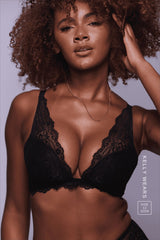


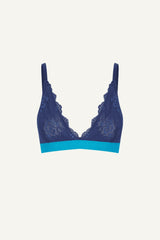


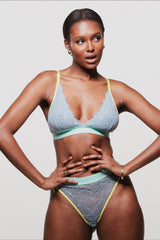



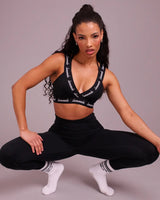





A bralette for D cup and above needs three things: a firm underband, separated cups with internal support, and straps wide enough to share the load. The right fuller bust bralette won’t feel like a compromise — it’ll feel like freedom from underwire without giving up lift. Here’s exactly what to look for and what to avoid.
Table of Contents
- Why Most Bralettes Fail Above a D Cup
- What to Look for in a Fuller Bust Bralette
- Bralette Support by Cup Size: What Actually Works
- The Best Fabrics for DD+ Bralettes
- How to Get Your Sizing Right
- Common Mistakes When Buying Bralettes Over a D Cup
- FAQs
Why Most Bralettes Fail Above a D Cup
The bralette market grew up around smaller cup sizes. Most high-street brands still design bralettes as pull-on triangle shapes in S/M/L sizing — fine for an A or B cup, useless for anyone in DD territory and beyond. The problem isn’t that bralettes can’t support a fuller bust. It’s that most bralettes weren’t built to.
According to Mintel’s UK Lingerie Report (2024), 63% of women wearing a D cup or above said they’d struggled to find wireless styles that provided adequate support. That’s not a flaw with the bralette concept. It’s a design gap the industry has been slow to close.
Generic bralettes fail fuller busts for specific, fixable reasons:
- S/M/L sizing doesn’t work. A size “Large” bralette tries to cover a 36C and a 34DD with the same piece of fabric. Those are completely different shapes.
- No cup separation. Triangle-style bralettes compress the bust flat rather than lifting and separating each side. That’s uncomfortable and unsupportive past a D cup.
- Weak bands. The underband does 80% of the support work in any bra. Cheap bralettes use thin elastic that stretches out within weeks.
- Narrow straps. Spaghetti straps look delicate but dig into the shoulders when they’re carrying real weight.
A fuller bust bralette is not a regular bralette stretched to a bigger size. It’s a different garment with different engineering — and that distinction matters.
What to Look for in a Fuller Bust Bralette
Shopping for a bralette for D cup and above gets simpler once you know the five features that separate a supportive design from a decorative one.
1. Band-and-cup sizing. This is non-negotiable. If a bralette only comes in S/M/L, walk away. You need a specific band size (28–44) paired with a specific cup size (D, DD, E, F, and beyond). That’s how you get a band tight enough to support and cups shaped to actually fit. The Lemonade Dolls size guide can help you nail your measurements.
2. A reinforced underband. Press your thumb against the bottom edge. It should feel firm, snappy, and wide — at least 2–3 cm. This is where your support lives. A flimsy, narrow band will ride up and leave the straps doing all the work, which means shoulder pain by lunchtime.
3. Internal support panels. This is what separates a best bralette DD from a mediocre one. Lemonade Dolls uses LD LiftTech — internal panels built into the cup construction that cradle and lift the bust from underneath. Power mesh linings add a second layer of hold without adding bulk. Double-lined cups smooth the silhouette and prevent show-through.
4. Wide or adjustable straps. Straps on a bralette for E cup and above should be wide enough to distribute weight comfortably and adjustable enough to fine-tune your lift. Ideally, they shouldn’t be doing more than 20% of the support work — the band handles the rest.
5. Separated, shaped cups. Each cup should be its own distinct section, not a single piece of fabric stretched across both sides. Separated cups prevent the uniboob effect and give each side proper positioning. Seaming within the cup isn’t a flaw — it’s structure.
According to Good Housekeeping’s bralette testing panel, bralettes that included all five of these features performed comparably to underwired bras in all-day wear tests for cup sizes up to G.
Browse the fuller cup collection to see these features in action.
Bralette Support by Cup Size: What Actually Works
Not every bralette for D cup and above needs the same level of engineering. A DD has different needs from a GG, and understanding that spectrum helps you shop smarter.
| Bralette Support Features by Cup Size Range | Cup Size Range |
|---|---|
| Minimum Support Features Needed | Recommended Lemonade Dolls Collection |
| D – DD | Band-and-cup sizing, lightly reinforced band, separated cups |
| All Bras | E – F |
All of the above + power mesh lining, wider straps, double-lined cups
Fuller Cup
FF – G
All of the above + LD LiftTech panels, firm wide underband, 3+ hook closure
High Support
GG – K
All of the above + maximum strap width, reinforced side panels, deepest cup engineering
High Support
What this table shows is that a D-cup bralette doesn’t need heavy-duty construction — a well-made bralette with decent band tension and separated cups handles it. But by the time you’re at an F or G cup, you genuinely need the layered engineering: power mesh, internal lift panels, reinforced side wings. Skipping those features is why so many people in that range have written bralettes off entirely.
A bralette for E cup is absolutely viable for all-day wear — you just can’t grab any bralette off the rack and expect it to work. You need one built for your size, not adapted from a smaller pattern.
According to research from the University of Portsmouth’s Research Group in Breast Health, breast weight in a G cup can exceed 1 kg per side. That’s a meaningful load, and it’s why band construction and strap width aren’t optional at this range — they’re structural requirements.
The Best Fabrics for DD+ Bralettes
Fabric choice matters more as cup size increases. The material isn’t just about how a bralette feels — it determines how long it holds its shape, how breathable it stays against skin, and whether it contributes to or fights against support.
Fabric Comparison for Fuller Bust Bralettes
| Fabric | Support Contribution |
|---|---|
| Breathability | Durability |
| Best For | Power Mesh |
| High — provides compression and hold | Excellent |
| High | Linings, side panels, cup support |
| Modal | Low — soft and drapey |
| Very good | Good |
| Outer fabric, next-to-skin comfort | Lace |
| Low to medium (depends on stretch) | Good |
| Moderate | Outer cups, decorative panels |
| Microfibre | Medium — smooth with some hold |
| Moderate | High |
| Seamless styles, under fitted clothing | Cotton Blend |
| Low — limited stretch recovery | Good |
| Moderate | Sleep bralettes, very light wear |
For a bralette for D cup and above, the ideal combination is typically power mesh as a lining for support, paired with a softer outer fabric — modal, lace, or mesh — for comfort and aesthetics. The So Soft Mesh collection uses exactly this layered approach: a breathable mesh outer with power mesh support built in.
One thing to watch: all-lace bralettes without a mesh or power lining can stretch and lose shape faster under the weight of a fuller bust. They’re beautiful, but they need that hidden support layer to last. Double-lined cups — where the cup has two fabric layers rather than one — also help with nipple coverage and smoothing, which becomes more relevant as cup size increases and fabric is covering more surface area.
How to Get Your Sizing Right
The single biggest reason people think bralettes don’t work above a D cup? They’re wearing the wrong size. This isn’t a scolding — bralette sizing is genuinely confusing, and the industry hasn’t helped by using three different sizing systems depending on the brand.
Here’s the process that actually works:
Step 1: Measure your underbust. Wrap a tape measure snugly around your ribcage, directly under your bust. Keep it level. This gives you your band size. Round to the nearest even number using UK sizing.
Step 2: Measure your full bust. Wrap the tape around the fullest part of your bust, keeping it parallel to the floor. Don’t pull tight — let the tape sit naturally.
Step 3: Calculate your cup size. Subtract the underbust measurement from the bust measurement. Each inch of difference corresponds to a cup size: 1” = A, 2” = B, 3” = C, 4” = D, 5” = DD, 6” = E, 7” = F, and so on through to K.
For a precise result, use the Lemonade Dolls size guide — it walks you through the process with UK sizing and maps directly to their band-and-cup bralette sizes (28–44 band, A–K cup).
Three sizing traps to avoid:
- Don’t size up in the band for comfort. A loose band rides up and kills your support. If the band feels tight at first, that’s correct — it’ll give slightly with wear.
- Don’t assume your wired bra size transfers perfectly. Many people have been wearing the wrong size in wired bras for years. Start fresh with measurements.
- Don’t default to S/M/L sizing. If you’re above a D cup, you need band-and-cup sizing. Generic sizing can’t accommodate the range of proportions between, say, a 32F and a 38DD.
Common Mistakes When Buying Bralettes Over a D Cup
After years of hearing from customers shopping for their first fuller bust bralette, certain mistakes come up repeatedly. Avoiding these saves time, money, and the frustration that makes people give up on bralettes altogether.
Mistake 1: Buying the prettiest one instead of the most supportive one. Aesthetics matter — nobody wants to wear something ugly. But if you’re a DD or above, start with support features and then filter for styles you love. Plenty of supportive bralettes look gorgeous. The bralette sets prove you don’t have to sacrifice one for the other.
Mistake 2: Assuming wireless means unsupportive. A bralette for D cup and above is not just a triangle of fabric with elastic. Modern fuller bust bralettes use LD LiftTech, power mesh, reinforced bands, and multi-panel cup construction that rivals underwired support for everyday wear. The technology has moved on; the assumptions haven’t.
Mistake 3: Ignoring the band. If you’re fiddling with straps and cups but the band is riding up your back, nothing else will fix the fit. The band should sit firm and level across your back, on the loosest hook when new. According to WRAP’s Textiles Market Situation Report, the most common bra-fitting error in the UK is wearing a band too large and a cup too small — and this applies to bralettes just as much.
Mistake 4: Only trying one style. Bust shape varies enormously — projected, shallow, wide-set, narrow, full on top, full on bottom. A bralette that’s perfect for one shape might not suit another in the same size. Try at least two different styles before deciding bralettes don’t work for you. The best sellers are a smart starting point because they’ve been validated across thousands of customers and body types.
Mistake 5: Treating bralettes as loungewear only. Plenty of people wear fuller bust bralettes to work, on dates, to the gym for low-impact classes, and under formal outfits. They’re everyday underwear, not just Sunday-morning-on-the-sofa underwear.
FAQs
Can you wear a bralette if you’re a DD or bigger?
Yes — and comfortably. Bralettes designed for fuller busts use band-and-cup sizing, power mesh linings, and internal support panels to provide genuine lift without underwire. Lemonade Dolls offers bralettes up to K cup with LD LiftTech construction. The key is choosing a bralette engineered for your cup size, not a generic S/M/L style stretched to fit.
What features should a fuller bust bralette have?
Five things matter most: a firm, wide underband (this handles roughly 80% of the support), separated and shaped cups, power mesh or double-lined cup construction, wide or adjustable straps, and internal support panels. Without these features, a bralette won’t provide enough hold for a D cup and above.
What’s the best bralette for a DD cup?
The best bralette DD wearers reach for will have band-and-cup sizing, a reinforced underband, and some form of structured cup — whether that’s power mesh, double lining, or internal support panels like LD LiftTech. DD sits at the lower end of “fuller bust,” so you don’t necessarily need the heaviest-duty construction, but you do need more than a basic triangle bralette offers. Check the all bras collection for DD-compatible styles.
Do bralettes give enough support for an E or F cup?
For everyday activities — commuting, working, walking, errands — a well-constructed bralette for E cup or F cup absolutely provides enough support. The band does the heavy lifting, so a snug underband with power mesh and wide straps handles daily life without issue. High-impact sport (running, HIIT, jumping) is the main scenario where a structured sports bra remains the better choice.
Why do most bralettes only go up to a D cup?
Most bralettes stop at a D cup because they use simple construction — a single layer of fabric in a triangle shape with thin elastic — that doesn’t scale to larger cups. Building a genuine fuller bust bralette requires separate cup engineering, reinforced bands, internal support panels, and wider straps, all of which increase design complexity and production cost. Inclusive brands like Lemonade Dolls have invested in this engineering, which is why they can offer bralettes from band size 28 all the way to K cup.
