








Modal fabric underwear is made from beech tree pulp spun into ultra-fine fibres that feel like a second skin. It’s softer than cotton, more breathable than synthetics, and — when sourced responsibly — far kinder to the planet. If you’ve been wearing cotton basics your whole life, modal is the upgrade you didn’t know existed.
Table of Contents
- What Is Modal Fabric and How Is It Made?
- Modal vs Cotton Underwear: Which Performs Better?
- Is Modal Sustainable? The Environmental Case
- Why Modal Is Ideal for Everyday Underwear
- Best Modal Underwear UK: What to Look For
- How to Care for Modal Fabric Underwear
- FAQs About Modal Fabric Underwear
What Is Modal Fabric and How Is It Made?
Modal fabric is a semi-synthetic fibre derived from the cellulose of beech trees. It belongs to the rayon family but goes through a modified spinning process that produces a stronger, softer, and more stable textile than standard viscose.
Here’s the production chain in plain terms. Beech trees are harvested — ideally from sustainably managed forests — and the wood is chipped and dissolved into a cellulose solution. That solution gets extruded through fine spinnerets (tiny nozzles), forming filaments that are spun into yarn and eventually woven or knitted into fabric. The result is a fibre that’s smooth, lightweight, and naturally breathable.
According to Lenzing AG, the Austrian company behind TENCEL Modal, their process recovers up to 95% of the solvents used, creating a near-closed-loop system. That recovery rate matters because one of the main criticisms of older rayon production was chemical waste.
Modal is not a fully natural fabric — it requires chemical processing to convert wood pulp into usable fibre. But unlike polyester or nylon, it starts from a renewable resource and can biodegrade at end of life. That puts it in a middle ground: more processed than linen, far less harmful than petroleum-based synthetics.
The beech trees used for modal grow primarily in central European forests. They don’t need irrigation or artificial pesticides, and they regenerate naturally from existing root systems — meaning no replanting is required after harvest. According to Canopy, a non-profit tracking forest-derived fabrics, beech forests used for modal production are among the lower-risk sources for cellulosic fibres.
| Rayon Family: How Modal Compares to Related Fibres | Fibre |
|---|---|
| Source Material | Wet Strength |
| Softness | Biodegradable |
| Standard Viscose | Wood pulp (various) |
| Low | Medium |
| Yes | Modal |
| Beech tree pulp | High |
| High | Yes |
| Lyocell (TENCEL) | Eucalyptus/beech pulp |
| High | High |
| Yes | Polyester |
| Petroleum | Very High |
| Low | No |
Modal vs Cotton Underwear: Which Performs Better?
Modal vs cotton underwear comes down to a simple truth: modal outperforms cotton in almost every metric that matters for something you wear against your skin all day.
Cotton has been the default for decades, and it’s not a bad fabric. But it has real drawbacks for underwear specifically. Cotton absorbs moisture and holds onto it — great for a towel, less great for a pair of briefs during a busy day. It pills after repeated washing, loses shape, and can feel rough once the initial softness wears off.
Modal handles all of this differently. The fibres are thinner and smoother than cotton, which means less friction against skin. It absorbs 50% more moisture than cotton but releases it faster, keeping you drier. And unlike cotton, modal actually gets softer with each wash rather than degrading.
Modal vs Cotton Underwear: Head-to-Head Comparison
| Property | Modal |
|---|---|
| Cotton | Softness |
| Exceptionally soft, improves with washing | Soft initially, degrades over time |
| Moisture Absorption | 50% more absorbent than cotton |
| Absorbent but retains moisture | Breathability |
| Excellent — wicks and releases moisture | Good — absorbs but holds dampness |
| Pilling Resistance | High |
| Low — pills within months | Shape Retention |
| Excellent — minimal shrinkage | Moderate — shrinks and warps |
| Environmental Footprint | Lower water use, biodegradable |
| High water use (conventional cotton) | Colour Retention |
| Excellent — dyes bond deeply to fibres | Moderate — fades with repeated washing |
According to OEKO-TEX, modal fabrics that carry their STANDARD 100 certification have been independently tested for over 350 harmful substances — making them a verified safe choice for garments worn directly against skin. That’s exactly the certification carried by the Everyday Eco collection from Lemonade Dolls.
There’s one area where cotton wins: price at the bottom end. Cheap cotton underwear costs almost nothing. But cheap cotton underwear also falls apart in a few months, which means you’re buying replacements constantly. Modal underwear lasts longer, performs better, and often works out cheaper per wear.
Is Modal Sustainable? The Environmental Case
Is modal sustainable? Modal is a sustainable fabric choice when it’s sourced from certified forests and produced using responsible manufacturing processes. Not all modal is created equal, though — the sourcing and production methods make the difference.
The environmental advantage starts with the raw material. Beech trees grow densely and require no irrigation, no pesticides, and no genetic modification. According to the Lenzing Group’s sustainability report, their beech wood sourcing uses up to 20 times less water than conventional cotton farming. For a thirsty planet, that’s a significant gap.
The production process matters just as much. Modern modal manufacturing — particularly Lenzing’s TENCEL Modal — uses a closed-loop system that captures and reuses the chemical solvents. Older viscose plants dump those chemicals into waterways, which is a genuine environmental problem in some producing countries. Responsible modal production avoids this entirely.
Modal is not automatically eco-friendly just because it comes from trees. You need to check for certifications. The ones that matter:
- OEKO-TEX STANDARD 100: Verifies the finished fabric is free from harmful chemicals
- EU Ecolabel or equivalent: Assesses the full lifecycle environmental impact
Lemonade Dolls’ Everyday Eco range uses 91% biodegradable modal sourced from beech trees, paired with 9% elastane for stretch. The collection also uses 100% recycled elastics, details you can verify on their transparency page.
At end of life, pure modal biodegrades naturally. Blended fabrics (modal + elastane, for instance) biodegrade more slowly because the synthetic component persists. That 9% elastane in most modal underwear is a trade-off: you need it for fit and recovery, but it does slow decomposition. It’s still a vastly better outcome than 100% polyester underwear sitting in landfill for centuries.
Why Modal Is Ideal for Everyday Underwear
Modal fabric underwear works so well for daily wear because it solves the specific problems people actually have with their basics — irritation, dampness, visible lines, and underwear that gives up after a few months.
The fibre structure of modal is inherently smooth. Under magnification, modal fibres have a rounder cross-section than cotton, which means less friction where fabric meets skin. If you’ve ever had cotton underwear rub or chafe during a long day, modal eliminates that. It drapes closely without clinging and moves with your body rather than bunching.
Moisture management is where modal really shines for underwear. The fibres absorb moisture vapour from your skin and transport it to the fabric’s outer surface, where it evaporates. You stay dry without that clammy feeling cotton can create. This makes modal particularly good for warmer months, active days, or anyone who runs warm.
Colour is another practical win. Modal takes dye exceptionally well, which means richer, deeper colours that hold up through dozens of washes. Those black briefs stay black. The neutrals don’t go grey. It’s a small thing, but it’s noticeable when you’re pulling underwear from the drawer every morning.
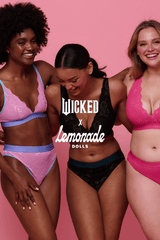
For size-inclusive brands like Lemonade Dolls, modal’s natural stretch recovery is a key benefit. The fabric moulds to different body shapes without losing its structure, which matters enormously across an extended size range. Paired with bras featuring LD LiftTech and power mesh, modal creates a complete set of basics that actually works for every body — not just the sizes fashion has traditionally catered to.
The longevity factor seals it. Modal resists the cycle of pilling, stretching, and fading that sends cotton underwear to the bin every few months. A well-made modal brief, washed properly, can last years. Fewer replacements means less waste and less money spent — which makes it the quiet, practical kind of sustainability that actually adds up.
Best Modal Underwear UK: What to Look For
The best modal underwear UK shoppers can find ticks three boxes: certified materials, thoughtful construction, and a brand that’s transparent about its supply chain. Here’s how to evaluate what you’re buying.
Check the modal percentage. A garment labelled “modal blend” could be 60% modal and 40% polyester — which defeats much of the purpose. Look for compositions where modal is the dominant fibre (80%+), with only a small percentage of elastane for stretch. The Everyday Eco collection at Lemonade Dolls uses 91% biodegradable modal and 9% elastane — about the highest modal ratio you’ll find in underwear that still fits properly.
Look for certifications, not just claims. “Eco-friendly” and “sustainable” aren’t regulated terms in UK fashion. Actual certifications — OEKO-TEX, or Lenzing-certified modal — are independently verified. If a brand can’t tell you where their modal comes from or show certification, treat the sustainability claims with scepticism. Lemonade Dolls publishes this information on their transparency page.
Consider the full product, not just the fabric. Elastic waistbands, stitching thread, dye processes, and packaging all contribute to a product’s environmental impact. Recycled elastics show a brand thinking beyond the headline fabric.
Where to buy modal underwear in the UK:
- Direct from brand websites — best for full range access and detailed product information
- ASOS — carries Lemonade Dolls alongside other modal options, with easy returns
- John Lewis — curated selection with in-store and online availability
The best sellers page is a useful starting point if you’re trying modal underwear for the first time. Customer reviews on those pieces give you real-world feedback on fit, feel, and durability from people who’ve actually worn them.
Price-wise, modal underwear typically sits between fast-fashion cotton and luxury silk. Expect to pay £10-£20 per piece for well-made modal basics in the UK. Per wear, that works out cheaper than cotton underwear you replace every few months.
How to Care for Modal Fabric Underwear
Modal fabric underwear is low-maintenance, but a few simple habits will keep it performing at its best for years rather than months.
Wash at 30°C. Modal doesn’t need hot water to get clean. A cool wash protects the fibres, saves energy, and prevents any shrinkage in the elastane component. Use a gentle, eco-friendly detergent — harsh chemicals can break down the fibre surface over time.
Skip the fabric softener. This sounds counterintuitive, but modal is already naturally soft. Fabric softener coats fibres with a waxy residue that actually reduces moisture-wicking ability. You’re paying for a fabric that breathes beautifully — don’t clog it up.
Air dry when possible. Modal dries quickly thanks to its moisture-release properties. Hanging or flat-drying is gentlest on the fabric. If you use a tumble dryer, stick to a low-heat setting. High heat won’t ruin modal immediately, but it’ll shorten the lifespan of the elastane in the blend.
Use a wash bag for delicates. This protects modal underwear from friction with heavier items like jeans and towels. It’s a small step that noticeably extends the life of lightweight fabrics.
Store flat or folded, not balled up. Modal has excellent shape recovery, but consistently crumpling it into tight balls in your drawer can create stress points over time. A simple fold keeps everything smooth and ready to wear.
The good news: modal is one of the most forgiving fabrics to care for. It doesn’t wrinkle easily, it resists odour buildup, and it maintains its colour without special treatment. Follow these basics and your Everyday Eco pieces will outlast most of what’s in your drawer.
FAQs About Modal Fabric Underwear
Is modal fabric good for underwear? Modal is one of the best fabrics for underwear. It’s 50% more absorbent than cotton, naturally resistant to pilling, and stays soft wash after wash. The fibre wicks moisture away from skin, making it ideal for all-day wear in any climate.
Is modal more sustainable than cotton? Modal made from sustainably managed beech trees uses up to 20 times less water than conventional cotton, according to the Lenzing Group. It’s also biodegradable when produced from 100% modal fibre. Look for certifications like OEKO-TEX and to verify sustainability claims.
Does modal shrink in the wash? Modal is highly resistant to shrinkage compared to cotton. It holds its shape through repeated wash cycles and doesn’t warp or stretch out. Washing at 30°C and air drying will keep modal underwear in peak condition for years.
Is modal the same as viscose? Modal is not the same as viscose, though both are semi-synthetic cellulose fibres. Modal is a second-generation improvement on viscose — it’s stronger when wet, softer to the touch, and more resistant to shrinkage. Think of modal as viscose’s more refined sibling.
Can you machine wash modal underwear? Yes, modal underwear is machine washable. Use a cool or warm cycle (30°C is ideal) with a gentle detergent. Modal actually gets softer with washing rather than breaking down. Avoid tumble drying on high heat — air drying or a low-heat cycle works best.
