
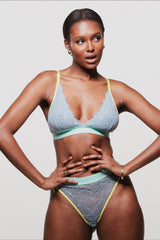



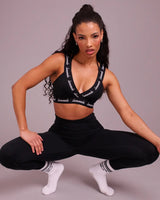
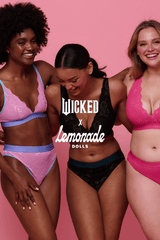




Size inclusive lingerie means every style is designed across the full size range from day one — not scaled up from smaller sizes as an afterthought. It’s a design philosophy, not a marketing label. True size inclusivity gives every customer equal access to the same styles, the same quality, and the same experience, whether they’re a 28A or a 44K.
Table of Contents
- Size Inclusive vs. Extended Sizing: What’s the Difference?
- Why “Plus Size Lingerie” Isn’t the Same Thing
- What to Look for in Inclusive Underwear Brands
- How Lemonade Dolls Approaches Size Inclusivity
- The Real Cost of Getting Sizing Wrong
- Where the Industry Is Headed
- FAQs
Size Inclusive vs. Extended Sizing: What’s the Difference?
These two terms get thrown around like they’re interchangeable. They aren’t.
Size inclusive lingerie is a design-first philosophy where every piece is engineered for the entire size range simultaneously. It means the 32B version and the 40G version of the same bra were developed together, with unique pattern grading, support structures, and fit testing for each size.
Extended sizing is not the same thing. It typically means a brand created a product in core sizes (say, 32A to 38DD), then stretched the range later by scaling patterns up or down. The result? Pieces that technically come in your size but don’t actually fit your body properly.
Here’s how the two approaches compare in practice:
| Size Inclusive vs. Extended Sizing: A Comparison | Factor |
|---|---|
| Size Inclusive | Extended Sizing |
| Design approach | All sizes designed simultaneously |
| Core sizes first, others added later | Pattern grading |
| Individual grading per size cluster | Scaled up/down from base pattern |
| Fit testing | Tested on models across full range |
| Often tested on mid-range sizes only | Style availability |
| Same styles across all sizes | Limited styles in outer sizes |
| Price consistency | Same price regardless of size |
| Sometimes higher prices for larger sizes | Marketing representation |
| Diverse bodies in all campaigns | Separate “plus” campaigns or sections |
According to a 2023 report by the British Fashion Council, fewer than 20% of UK lingerie brands design across their full size range from the initial development stage. Most still bolt on additional sizes after the fact.
Why “Plus Size Lingerie” Isn’t the Same Thing
Let’s be clear: there’s nothing wrong with the term “plus size.” It describes a size category, and plenty of people use it comfortably. But plus size lingerie UK shoppers have been dealing with a particular frustration for decades — being funnelled into a separate section with fewer styles, duller colours, and designs that prioritise function over everything else.
The problem isn’t the term itself. It’s what happens when brands treat “plus” as a bolt-on rather than a starting point.
According to Statista’s 2024 UK apparel market data, the UK plus-size clothing market is worth over £9 billion annually, yet the majority of lingerie brands still offer fewer than half their styles above a DD cup. That’s a staggering gap between demand and supply.
When a brand is genuinely size inclusive, it doesn’t need a separate “plus size” tab on its website. Every collection page shows every size. You don’t land on a pared-back selection of beige bras while your mate in a 34C gets lace, mesh, and seasonal prints.
This matters beyond aesthetics. According to research published in the Body Image journal (Elsevier, 2022), being excluded from mainstream fashion categories is directly linked to lower body satisfaction and reduced self-esteem. Separate sections reinforce the idea that some bodies are standard and others are exceptions.
Inclusive underwear brands don’t segregate their customers. They build one range, one shopping experience, and one message: this is for you, full stop.
What to Look for in Inclusive Underwear Brands
Not every brand that claims inclusivity delivers on it. Here’s a practical checklist for spotting the real thing versus a marketing exercise.
A truly inclusive brand is one that shows diverse bodies in its core marketing (not just a single campaign), offers the same styles across its full range, and provides transparent sizing information that reflects real measurements.
Ask these questions before you buy:
- Does every style come in every size? If the lace set only goes up to a DD while the full-coverage T-shirt bra goes to a K, that’s extended sizing, not inclusivity.
- Is there a single shopping experience? You shouldn’t have to click into a separate “curvy” or “plus” section. All sizes should live together.
- Do they show your size in their imagery? Stock photos of one body type with a size range listed below don’t count.
- Is their size guide detailed and honest? Look for brands like Lemonade Dolls that publish a thorough size guide with real measurements, not vague S/M/L labels.
- Do they charge the same price regardless of size? Some brands add a surcharge for larger sizes. That’s a red flag.
| Inclusive Lingerie Brand Checklist | Criteria |
|---|---|
| Genuinely Inclusive | Marketing-Only “Inclusive” |
| Full range per style | Every style in every size |
| Select styles in extended sizes | Website layout |
| One unified shop | Separate plus-size section |
| Model diversity | Multiple sizes in every campaign |
| Token representation or one-off shoots | Size guide transparency |
| Detailed measurements published | Vague or missing size info |
| Pricing | Uniform across sizes |
| Surcharges for larger sizes | Wireless/bralette options |
| Available in fuller cups | Restricted to D cup and below |
If a brand ticks every box, you’ve likely found one that walks the walk. Lemonade Dolls’ full bra collection is a solid example — every style runs from 28 to 44 in band and A to K in cup.
How Lemonade Dolls Approaches Size Inclusivity
Lemonade Dolls was founded in 2019 by Lemon Fuller with a specific frustration in mind: why couldn’t she find a bralette that worked for her fuller bust? The industry’s answer at the time was essentially “you can’t.” Bralettes stopped at a D cup, and that was that.
So she made one that didn’t. Lemonade Dolls created the first bralette designed to support up to an H-cup — not by adding extra hooks to an existing design, but by engineering it from scratch with fuller busts as a core part of the brief.
That approach defines everything the brand does. A few specifics:
- Band sizes 28 to 44, cup sizes A to K. That’s not an extended range bolted on — it’s the starting range for every design.
- “Real” sizing. When Lemonade Dolls says Medium, they mean a UK 14-16. No vanity sizing, no guessing games. Their size guide spells it out clearly.
- Fuller cup styles that don’t compromise on design. Lace, mesh, bold prints — all of it available across the full range.
- Gender-affirming options designed with input from the LGBTQIA+ community, because size inclusivity means nothing if it only accounts for one type of body or one experience of wearing lingerie.
You can read more about the brand’s founding philosophy on Lemon’s own page. It’s refreshingly blunt about why the lingerie industry needed shaking up.
The best sellers collection is worth a look too — you’ll notice the top-performing pieces span the entire size range, which tells you something about who’s actually buying.
The Real Cost of Getting Sizing Wrong
Bad sizing isn’t just annoying. It has real consequences for physical comfort and mental health.
Wearing the wrong bra size can cause back pain, shoulder grooves, skin irritation, and restricted breathing. According to a 2023 study from the University of Portsmouth’s breast health research group, approximately 80% of women in the UK wear the wrong bra size — and the problem is worst at the outer ends of the size spectrum, where options are fewest.
When brands only offer extended size bras as an afterthought, the fit suffers most for the people who need good engineering the most. A scaled-up pattern doesn’t account for how breast tissue distributes differently at a G cup versus a C cup. The gore sits wrong. The straps dig. The band rides up.
And then there’s the psychological toll. Shopping for lingerie shouldn’t feel like an exercise in compromise. But for millions of UK shoppers, it does. You find something you love, check for your size, and it’s not there. Or it is there, but only in black and nude. Repeatedly hitting that wall erodes confidence — the exact opposite of what lingerie should do.
This is why size inclusive lingerie matters as a design standard, not a marketing trend. When your size is treated as a first-class citizen in the design process, the fit works, the style choices are equal, and the experience of shopping feels like it was built with you in mind. Because it was.
Where the Industry Is Headed
The lingerie industry is shifting, though not as fast as it should.
The good news: consumer demand for inclusive underwear brands is at an all-time high. Search data from Google Trends shows that UK searches for “size inclusive lingerie” have more than tripled since 2020. Brands that don’t offer genuine inclusivity are losing market share to those that do.
Several forces are driving this:
- Social media accountability. Customers call out performative inclusivity publicly and quickly. A brand can’t post one diverse campaign and coast on it — shoppers check the actual size range.
- Better manufacturing technology. Advances in fabric engineering and 3D pattern modelling make it more feasible to produce truly inclusive ranges without prohibitive cost increases.
- Regulatory pressure. The UK’s Advertising Standards Authority has cracked down on misleading size claims, and the push for standardised sizing across the industry continues to build.
What still needs to change? Plenty. Most high-street lingerie retailers still top out at a DD or E cup in the majority of their styles. The gap between what’s available online from specialist inclusive underwear brands and what you can try on in a shop remains enormous. And pricing parity — charging the same regardless of size — is still far from universal.
But the trajectory is clear. Brands built on genuine inclusivity, like Lemonade Dolls, aren’t niche anymore. They’re setting the standard that the rest of the industry will eventually have to meet.
FAQs
What does size inclusive lingerie mean?
Size inclusive lingerie means a brand designs every style across its full size range from the very start, rather than creating pieces in smaller sizes first and scaling them up later. This approach ensures proper fit, proportional design, and equal style options regardless of your size. It’s a design philosophy — not just a wider size range on the label.
What is the difference between plus size and size inclusive?
Plus size refers to a specific size category, typically UK 16 and above. Size inclusive describes a design philosophy where all sizes, from small to large, are created simultaneously with equal attention to fit, style, and construction. A brand can sell plus sizes without being truly size inclusive if it treats those sizes as secondary additions.
What sizes does Lemonade Dolls carry?
Lemonade Dolls offers band sizes 28 to 44 and cup sizes A to K. Their sizing uses real body measurements, so a Medium corresponds to a UK 14-16 rather than the smaller sizing many mainstream brands use. You can check exact measurements on their size guide.
Why is size inclusive lingerie more expensive?
Truly size inclusive lingerie often costs more to produce because it requires separate pattern grading for each size cluster, additional fit testing across the full range, more fabric variations, and specialist construction techniques for larger cup sizes. Good inclusive brands absorb these costs rather than charging different prices per size.
Are bralettes available in fuller cup sizes?
Yes. Lemonade Dolls pioneered the first bralette designed to support up to an H-cup. While most brands stop bralette sizing at a D or DD, inclusive brands now engineer wireless styles with strategic seaming, wider bands, and supportive fabrics that genuinely work for fuller busts.
