










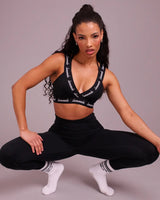





The best sports bra for a big bust is a high-support, encapsulation or combination style that holds each breast separately, has wide adjustable straps, a firm underband and full cup coverage. For D+ cups, that combination cuts bounce and the breast pain that makes restarting a routine miserable. Here's how to choose one that actually stays put.
- Why a fuller bust needs more support
- Encapsulation vs compression vs combination
- Features to look for in a D+ sports bra
- The 5-point fit check
- Fuller-bust options from Lemonade Dolls
- Match your sports bra to the impact level
- How to make a fuller-bust sports bra last
- FAQs
Why a fuller bust needs more support
Breasts have no muscle holding them in place. They're supported only by skin and delicate Cooper's ligaments, so the heavier the bust, the more they move when you run, jump or lift. According to the University of Portsmouth Research Group in Breast Health, the breast can move up to 21cm during exercise, and roughly 72% of women experience breast pain during physical activity.
That movement isn't just up and down. The research shows the breast travels in a butterfly path: about 50% of the motion is vertical, 25% side to side and 25% forwards and backwards. An everyday bra only tackles the vertical part, which is why it leaves a fuller bust under-supported the moment you pick up the pace. The heavier the bust, the more dramatic that multi-directional swing becomes, and the more discomfort it creates if the bra can't keep up.
A proper sports bra is engineered to control movement in all three directions. It is not a tighter everyday bra or a fashion bralette worn to the gym. For D+ cups, getting this right is the difference between a comfortable session and skipping exercise altogether. If your current bra is past its best, our guide on spotting the signs it's time to replace a bra is a useful gut-check.
Encapsulation vs compression vs combination
There are three ways a sports bra controls movement, and the right one depends largely on your cup size.
| Support type | How it works | Best for |
|---|---|---|
| Compression | Presses the bust against the chest as one unit | A to C cups, low to medium impact |
| Encapsulation | Separate moulded or structured cups support each breast individually | C to F+ cups, all impact levels |
| Combination | Encapsulated cups plus an outer compressive layer | D+ cups, running and high impact |
For a fuller bust, encapsulation or combination almost always wins. Compression-only styles flatten and merge the breasts, which feels secure for smaller cups but leaves heavier breasts to shift as a single mass. Combination styles give you the most control because they hold each breast and add an extra layer of hold over the top. That's why so many of the best-rated sports bras for D+ cups use this dual approach rather than relying on compression alone.
Want the full breakdown of soft-cup versus structured styles? Our bralette vs bra explainer covers the construction differences in plain English.
Features to look for in a D+ sports bra
Once you've picked a support type, these are the details that make a fuller-bust sports bra work in real life.
- Wide, adjustable straps spread the load across your shoulders instead of digging in. Thin spaghetti straps are a red flag for D+ cups.
- A firm, wide underband does most of the support work, not the straps. It should sit level and snug all the way round.
- Full cup coverage stops spillage at the top and sides. According to the University of Portsmouth team, who have monitored over a million breast bounces, every 1cm higher the neckline sits on a high-support bra reduces bounce by roughly 1%.
- A racerback or clip-adjustable back pulls the straps inward for extra anti-bounce hold during running and jumping.
- Breathable, moisture-wicking fabric keeps the skin under a fuller bust comfortable. Our guide to modal fabric explains why soft eco fibres feel better against the skin.
If you mostly do lower-impact movement like walking, Pilates or yoga, you may not need maximum compression. Our fuller-bust bralette guide covers supportive everyday options that still hold up.
The 5-point fit check
The most supportive bra in the world fails if it doesn't fit. Run through this before every purchase, ideally after a few star jumps in the changing room.
| Check | What good looks like | Warning sign |
|---|---|---|
| Underband | Firm and level all the way round | Rides up at the back |
| Cups | Bust fully enclosed, no spillage | Bulging at top or sides |
| Straps | Snug, two-finger gap, no digging | Red marks or sliding off |
| Bounce test | Minimal movement on jumping | Noticeable bounce or pain |
| Breathing | Snug but you can breathe deeply | Restricts your breath |
Not sure of your starting size? Walk through our at-home bra measuring guide first, then size your sports bra from there. Sports bra sizing can run differently to everyday bras, so always do the bounce test rather than trusting the label alone.
Fuller-bust options from Lemonade Dolls
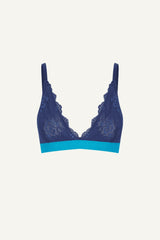
We design for every shape, and that includes proper support for a fuller bust. The Signature Lace High-Support Bralette gives you encapsulated, all-day hold without sacrificing softness, while the Signature Lace Fuller Cup is cut specifically for D+ shapes that need more coverage and a stronger underband.
For higher-support needs across your wardrobe, The One high-support bra blends structure with our signature lace. And if you're rebuilding an activewear edit from scratch, our inclusive activewear collection is a good place to start. Every piece is OEKO-TEX certified, so it's tested against harmful substances and gentle on skin.
Match your sports bra to the impact level
Support isn't one-size-fits-all. The right level depends on how much your chosen activity makes you move. A fuller bust generally needs to size up the support level compared to a smaller bust doing the same workout, because there's simply more weight in motion.
| Impact level | Activities | Support a D+ bust needs |
|---|---|---|
| Low | Yoga, Pilates, walking, stretching | Medium to high encapsulation |
| Medium | Cycling, weight training, hiking, skiing | High encapsulation |
| High | Running, HIIT, bootcamp, aerobics, tennis | Maximum, combination style |
The cost of getting this wrong is more than discomfort. According to research published in Frontiers in Sports and Active Living, greater breast support is linked to lower oxygen consumption and better running economy, meaning the right bra can make your workout feel genuinely easier. Skimp on support for a fuller bust and you risk pain, stretched ligaments and the kind of self-consciousness that ends a routine before it starts.
How to make a fuller-bust sports bra last
A high-support bra is an investment, so look after it. Hand-washing or using a gentle cold cycle in a mesh laundry bag protects the elastic fibres that do the supporting. Heat is the enemy: skip the tumble dryer and reshape the cups before air-drying flat, away from radiators and direct sun.
Rotate at least two or three sports bras so each has time to recover its elasticity between wears. Sweat, body oils and friction break fabric down faster than anything, so rinsing a bra promptly after a sweaty session genuinely extends its life. When the band starts riding up or the bounce creeps back, retire it. A worn-out high-support bra protects a fuller bust about as well as no bra at all. For more on what makes our fabrics feel good against skin, see behind the seams.
What sports bra is best for a large bust?
An encapsulation or combination high-support sports bra is best for a large bust, because it holds each breast separately rather than squashing them together. Look for wide adjustable straps, a firm wide underband and full cup coverage in your correct band and cup size.
Is compression or encapsulation better for big boobs?
Encapsulation is better for a bigger bust. Compression styles flatten the breasts against the chest as one mass, which leaves heavier breasts under-supported. Encapsulation cups support each breast individually, and combination bras add a compressive layer on top for the most control.
How do I know if my sports bra is supportive enough?
Do the bounce test. Jump or jog on the spot in the changing room. If your breasts move very little and there's no pain, it's supportive enough. Noticeable bounce, shoulder strap dig or spillage at the cups all mean you need a different size or a higher support level.
Do I need a different sports bra for running than for yoga?
Often, yes. Running is high impact and needs maximum support, ideally a combination style. Yoga and Pilates are low impact, so an encapsulation or supportive bralette is usually enough. Matching the bra's impact rating to your activity keeps you comfortable and protects the ligaments.
How often should I replace a sports bra?
Most sports bras lose their elasticity and support after 6 to 12 months of regular use, or roughly 30 to 40 washes. If the underband has stretched, the fabric feels slack or you've started noticing more bounce, it's time to replace it even if it looks fine.
